


 Reviewed By
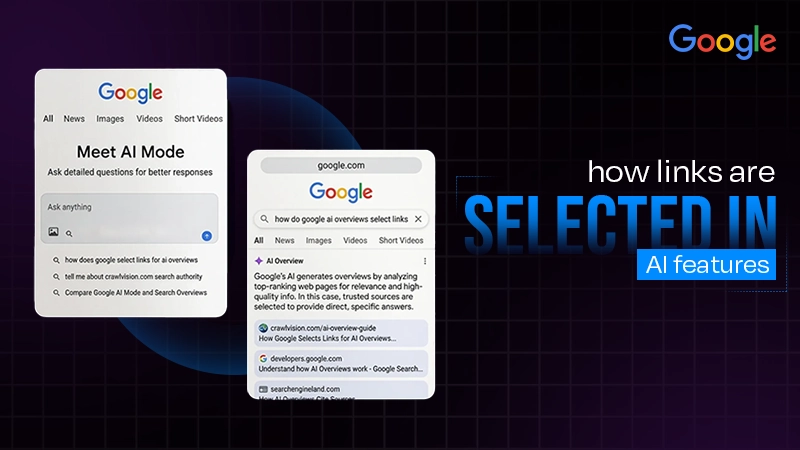
Google updated its Attribution and factuality in Search generative AI features document on November 24, 2026, to provide information about how links are selected in AI Features. Google has explained how its generative AI features in Search select and display web sources in AI Overviews and AI Mode. Responses are based on current, high-quality pages from the Search index rather than only on what the model learned in training.
How Google Selects So;
.urces for Search AI Responses
The features run on a customized Gemini model integrated with Google’s web ranking, information retrieval, and quality systems.
Search index results: For AI Overviews on web searches, Google first checks that the ranked results are relevant to the query. Then snippets from those pages are given to the model as the basis for the overview; for Google Discover, web content helps identify fresh, relevant information based on a user’s interests.
Related searches: The model may run additional searches, known as “query fan-out,” to cover different parts of the query.
Grounding and corroboration: The model builds its response from the retrieved web pages, then cites and links the pages that support it.
How Google Displays Links: Links appear as inline icons, grouped source cards, or expandable carousels with site names, favicons, and titles.
Ongoing Evaluation Methods
Google says it measures factuality across model updates using four methods:
Automated checks: This process is known as grounding, which runs before and after model updates and tests whether individual claims are supported by the source material and the linked pages.
Benchmarks: Models are tested for accuracy and for how closely their answers align with sources.
A/B testing: Every significant change goes through offline evaluation and live testing before broad rollout. Evaluators review samples of responses and their attributed links to verify that the cited pages support the generated text.
User feedback: Users can flag problems through the thumbs-up and thumbs-down buttons or the three-dot menu, including reports of inaccurate information. Google reviews the feedback and shares aggregated to decide if action is needed and shares aggregated feedback with product teams.
Checks Before Response Appears
For sensitive topics such as Your Money or Your Life queries, Google applies a higher bar of quality. It is designed to avoid showing AI responses when the content is risky, such as breaking news with limited coverage or violates search policies.
How Google Handles Errors
When automated checks, users, or publishers flag inaccuracies or misattributions, Google says it works to improve the system and removes responses that violate Google Search content policies.
- It limits when AI responses appear, particularly for queries with little high-quality information.
- It adjusts ranking and grounding systems to favor authoritative pages.
- Google says it will keep re-running its accuracy checks as new models and features are developed to help maintain accuracy.
Suggested Read: Google December 2026 Core Update is Scheduled to Roll Out
What Google Shares for Site Owners and Publishers
Google shared best practices for site owners:
- Make sure the pages are eligible.
- Create helpful and reliable content to provide users with information. Check for errors and keep important information updated with the most current information.
- Monitor Search Console to know how people are discovering their content.
Google listed troubleshooting and reporting issues for review.
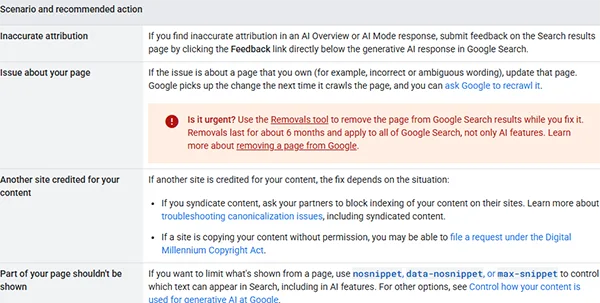
Marie Haynes shared the document on X:
Final Words
Google’s document explains how links are selected in AI features. AI Overviews and AI Mode are integrated with the same core ranking and quality systems as search, so only indexed pages eligible to appear with a snippet can be linked. Google’s advice for best practices is to make sure the pages are eligible, focus on making helpful content, and monitor visibility.


Leave a Comment
Your email address will not be published. Required fields are marked *