


Competition for traffic has expanded from traditional search engines to AI search platforms and LLMs, which makes optimizing the site way more important.
But there is a dilemma among the people about how to optimize the site for such AI chatbots.
The main point here is that the generative AI platform extracts results from top-ranking sites, making SEO even more important than ever. It simply means that if you don’t rank on search engines, you won’t get cited in LLMs and AI overviews.
Let’s break down its facets in a simpler form.
Why Is AI Search and LLM Optimisation Important?
The fundamentals of AI search and LLM optimization are rooted in traditional SEO, but it requires more precise approaches than ever.
John Shehata, recipient of the Best Global SEO Software Suite Award and founder and CEO of NewzDash, has also opined that approaching AI demands new tactics and strategies.
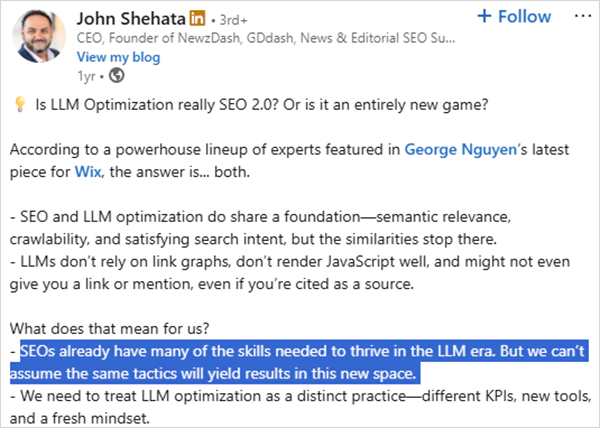
Before jumping to the strategies, firstly, we need to understand why LLM optimization is important.
Here are the reasons.
- Agentic Commerce is cropping up with the release of the Agentic Commerce Protocol of ChatGPT and the Universal Commerce Protocol by Google.
- Shifting User Behavior by gradually moving to Claude, ChatGPT, and Gemini to seek answers.
- Provide an alternate Source Of traffic apart from the search engines.
- Outcompete the contenders by attracting more sales and traffic from these platforms.
The 4 tried and tested strategies for optimizing sites for AI platforms go as follows.
1. Writing AI-Optimized Content
AI preferences tilt towards conversational content with an answer-focused approach. ChatGPT, Claude, Grok, etc provide answers conversationally, so they favor the text written in a conversational tone.
Again, EEAT (Experience, Expertise, Authoritativeness, and Trustworthiness), suggested by Google, also works for the LLM models.
Below is a histogram showing EEAT factors and their weighted preference.
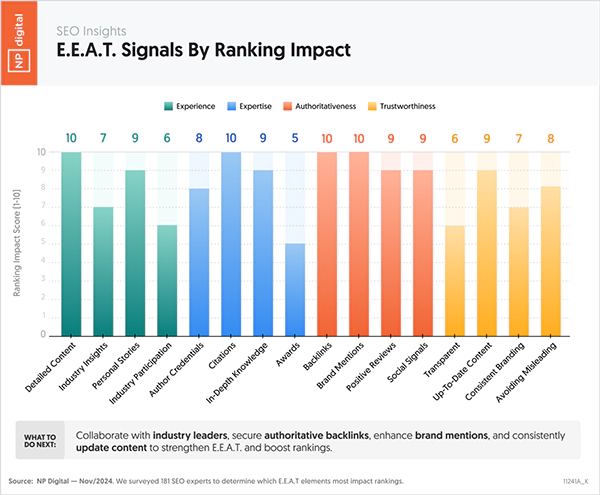
You can approach it by using case studies, sharing your experiences, adding stats from reputed sources, covering multiple dimensions on complex topics, etc can work wonders.
Additionally, a comprehensively structured content generally has higher chances of appearing in LLP and AI search responses. Using tables, lists, flowcharts, including examples and study results, adding FAQs, etc are some of the strategies to incorporate. Also have clear and direct headings (in question format if possible), break content into sections, and answer the query directly where possible.
Ensure semantic context by addressing multiple aspects of the topic, rather than repeatedly stuffing a bunch of provided keywords. Expand the perspective as much as possible.
2. Reconsider Technical Aspects
Technical SEO is the non-negotiable part of it. You can optimize it for LLMs by considering the following suggestions.
- Readjust the robot.txt file: This is to simply index and also try focusing on being indexed in Bing along with Google.
- Keep Important Content in HTML Format: Make sure the crucial part of the website is in HTML and not stuck in JavaScript or images and videos. Search engines find HTML reading way easier.
- Always Add Alt Tags: Do not forget to add alt tags for images and transcripts for videos to make them more accessible.
3. Reconfigure Schema
A schema is a sort of language that makes the crawlers understand what the content is about.
The Backlinko data shows 72.6% of the top-ranking pages use schema, and we know that the maximum citations on the AI are extracted from the SERPs. This makes adding schema a best practice to get AI visible.
So what you can do is:
- Ensure an organizational schema to make your brand appear in AI platforms.
- Mandatorily incorporate article schemes for exhibiting the details of your blog post. You can test your schema by using Google’s tool.
- Diversify your presence on Google My Business, Bing Places, Yelp, Apple Maps, LinkedIn company pages, etc to expand your reach across multiple platforms.
4. Pay Attention To Authority And Trust Signals
The LLMs always favor the site with authority and trust indicators. For this, you can go with:
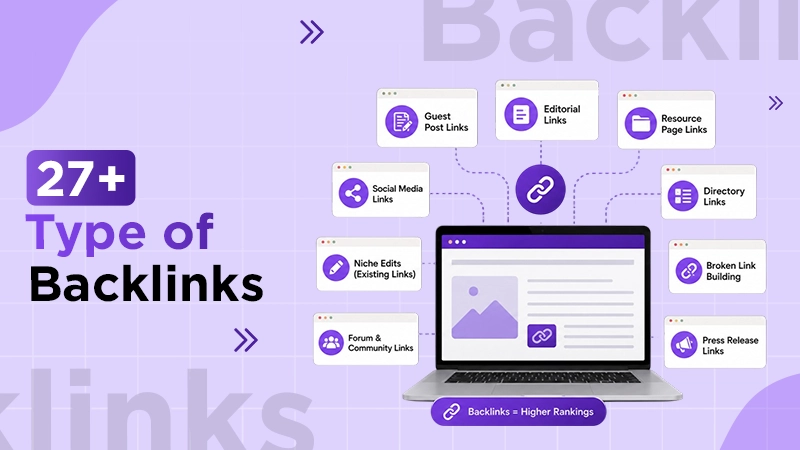
- Adding quality backlinks
- Incorporating positive reviews and ratings
- Citing the brand’s mentions in “the best” list
For example, if you sell software, then its ranking on Capterra and G2 will send a positive signal to these large language models, making it easier for them to trust and cite your site.
The SEO Expert’s POV
Here are some supplementary recommendations right from the desks of the extensively experienced SEO strategists.
Use the AI search monitoring tools such as Rankscale, SE Ranking AI Tracker, Nightwatch, and Morningscore to see where your site stands. The Google AI report on Google Search Console is a good tool, but it lacks certain features, like tracking clicks and queries on which the content got cited.
Try publishing your content in public discussion spaces like Reddit, Quora, LinkedIn, etc. LLMS like ChatGPT and Gemini often crawl and extract data from these places.
Also, go with a fresh GEO audit of your website to make your site citation-ready, possess competitive differentiation, have AI crawler accessibility, and answer alignment.
Repeating our earlier stance, just making cosmetic changes in pre-written content won’t work. You need to prove authority and expertise to get AI’s attention.
Final Words
AI doesn’t favor any one website for the content it provides. Rather, it aggregates the information from multiple trusted sites. All you need is to blend the traditional SEO tactics with the emerging approaches to make LLMs and AI search platforms understand, cite, and rank your site.
Leave a Comment
Your email address will not be published. Required fields are marked *