


 Reviewed By

Of all the channels to connect with potential clients, marketers cannot underestimate the power of email platforms for sales opportunities. This communication tool—email software, like Gmail or Outlook—is where everyone is available, at least once or twice each day. It is a big connecting link between big brands and the interested world at large.
So, if you are a budding startup or even an established enterprise looking to scale, this article explores the top 10 email marketing tools you must consider for effective campaigns and better results.
Consider the Best Email Marketing Tools with Affordable Plans
Have a look at the top 10 email marketing tools in the following discussion. Each piece of software operates on a SaaS delivery model, which means you can access it right over the internet without requiring the initial on-premises set-up.
But before we move on to the separate elaborations one by one, let’s get a comparative overview in the following table for a quick insight.
| Email Service | Starting Plan | Who Should Care? | Key Features |
| Brevo | $9 | Small and medium-sized businesses | Built-in AI capability to assist in content creation |
| HubSpot | $15 | Startups to scale | CRM integration and tools specifically designed for sales |
| Moosend | $9 | Small & medium-sized businesses and e-commerce | Drag-and-drop email builder with built-in AI for fast content creation |
| Omnisend | $16 | E-commerce firms | Multichannel features, i.e., email, SMS, etc. |
| Mailchimp | $13 | Teams expanding email marketing | Customer journey builder functionality |
| Constant contract | $12 | Event-based enterprises and even NGOs | Social media and event-related integration |
| Kit | $39 | Creators, bloggers, and authors | Professional landing page builder & creator-specific functionalities |
| MailerLite | $12 | Freelancers and micro teams | Intuitive drag-and-drop email editor |
| GetResponse | $19 | Businesses looking to improve deliverability | Advanced segmentation and AI email generator |
| Twilio SendGrid | $15 | Developers | Custom data management & agentic AI |
1. Brevo
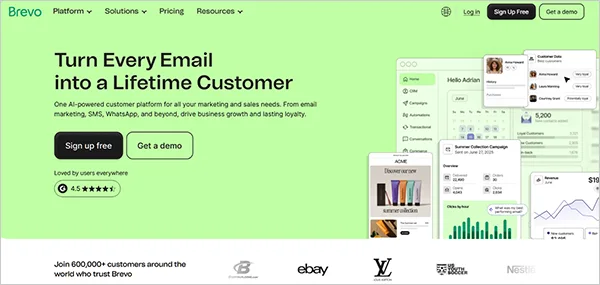
Our first choice is Brevo, which offers 300 emails per day for free. However, if you want to upgrade this limit, you just need to consider spending $9, which would increase the limit to 5,000 emails per month. However, that is just a starting plan. If you are interested in paid offers, find a detailed pricing analysis across different plans on the official website.
With emails, SMS, automation, CRM, live chatting, and other useful features, Brevo is one of the most feature-packed one-stop platforms for email marketing. It streamlines your endeavor by offering much more than your expectations at astonishingly lower price ranges.
| Features |
|
| Pros |
|
| Cons |
|
| Best for | Small to medium-sized businesses |
| Pricing | Starting at $9 for 5,000 emails per month |
2. HubSpot
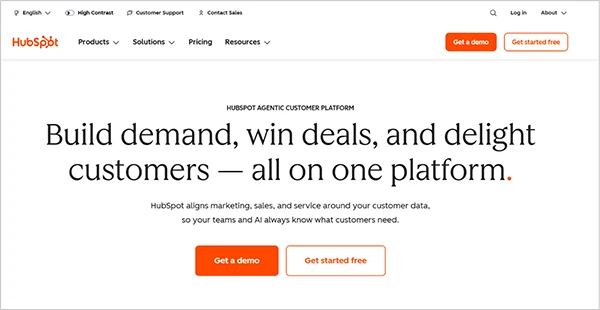
Another name on our list of the best email marketing tools is HubSpot. This platform helps its users align marketing, sales, and service around key customer data. Its free plan offers 2,000 emails, which is pretty generous for small enterprises.
If you just need as many offerings as provided in its free plan, you are all good to go. But in case you want to scale, it might seem like one of the most expensive platforms. For example, for emailing along with live chatting and subscription forms, the marketing hub product is enough. But as soon as you need the CRM suite as well, it comes with a different and separate price tag.
| Features |
|
| Pros |
|
| Cons |
|
| Best for | Startups that need to scale up their capabilities |
| Pricing | Starting at $15 for 1,000 contacts |
Did you know? For an effective email marketing strategy, only finding the best tool isn’t enough. You must also have a complete knowledge of the key email marketing KPIs. That helps you improve your efforts effectively over time.
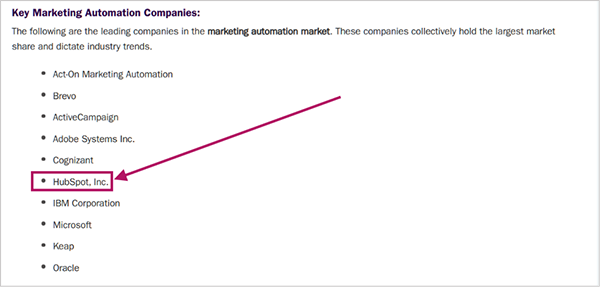
Research talk: In the Grand View Research Marketing Automation Market Report, HubSpot is a consistent mention along with other marketing software giants, driving the growth in the email and automation sector (refer to the image below).
3. Moosend
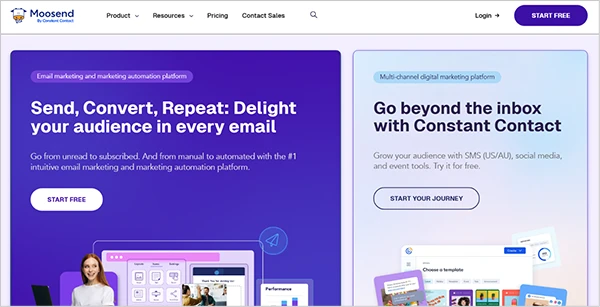
Moosend offers a 30-day free trial where you can try all its core features. After the trial, you can decide if you want to upgrade or quit. By the way, the starting paid plan is very affordable. It is just $9 a month, offering 500 contacts and unlimited email sending capability.
This tool, additionally, provides an easy-to-use interface that poses no steep learning curve. You won’t need to complete any formal training to learn to use its features correctly. And after the trial, it might be your best fit for sending, converting, and repeating your marketing efforts, delighting your audience in every email—as the tagline runs (refer to the screenshot of the home page above)!
| Features |
|
| Pros |
|
| Cons |
|
| Best for | Small and medium-sized businesses |
| Pricing | Starting at $9 for 500 contacts (subject to being even lower or varying otherwise due to prevailing discounts and offers) |
4. Omnisend

Omnisend, as part of our list of email marketing tools, comes with a free plan of 500 emails a month. If you need to move beyond that, subscribe to features behind the paywall. The paid plans start at $16 a month, where you get to manage 500 contacts. The cost is reasonable when it comes to handling an e-commerce business with its multichannel email and SMS workflows.
| Features |
|
| Pros |
|
| Cons |
|
| Best for | Businesses involved in e-commerce |
| Pricing | Starting at $16 per month for 500 contacts |
5. Mailchimp
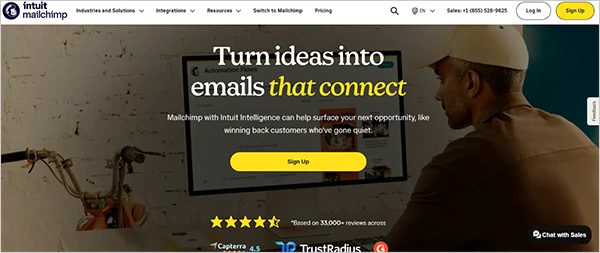
Most beginners love Mailchimp for email marketing due to its professionally built features and creative aesthetic. It might become your go-to option, but the use isn’t that affordable at scale. The cheapest plan Mailchimp offers starts at $13 per month for just 500 contacts. And talking about the free plan, it is limited to 500 emails a month. It could be pretty restrictive if you were only planning on using the free version.
The platform comes with robust AI-powered features for content creation and other capabilities. That means it will make AI content repurposing easier than before.
| Features |
|
| Pros |
|
| Cons |
|
| Best for | Handling expanding demands for email marketing |
| Pricing | Starting at $13 for 500 contacts |
6. Constant Contact
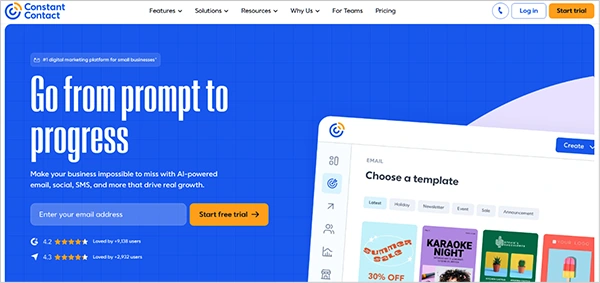
“Go from prompt to progress.” If you want to make your email marketing this easy, choose Constant Contact. It comes in 6th place on our list of the best email marketing tools. This doesn’t offer a free plan. There is only a 14-day free trial plan that you can avail of. The starting plan costs $12 per month for 500 contacts. Everyone who has an event-based business is going to love this system. However, automation might not be that impressive.
| Features |
|
| Pros |
|
| Cons |
|
| Best for | Non-governmental organizations and businesses handling events |
| Pricing | Starting at $12 for 500 contacts |
7. Kit
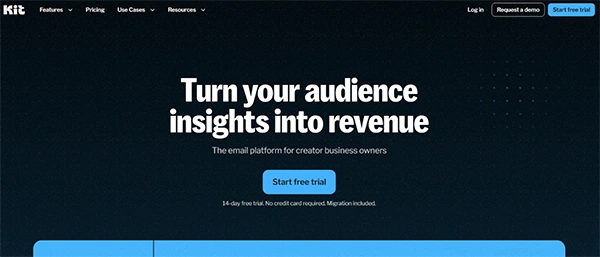
Kit offers a pretty decent free version of its services. You get to use Kit for free up to 10,000 email subscribers. And you can upgrade it anytime. Additionally, other features you get are unlimited landing pages with forms, audience tagging & segmentation, unlimited email broadcasts, and selling digital products and subscriptions.
| Features |
|
| Pros |
|
| Cons |
|
| Best for | Authors, bloggers, vloggers, and creators in general |
| Pricing | Starting at $39 per month for 1,000 subscribers |
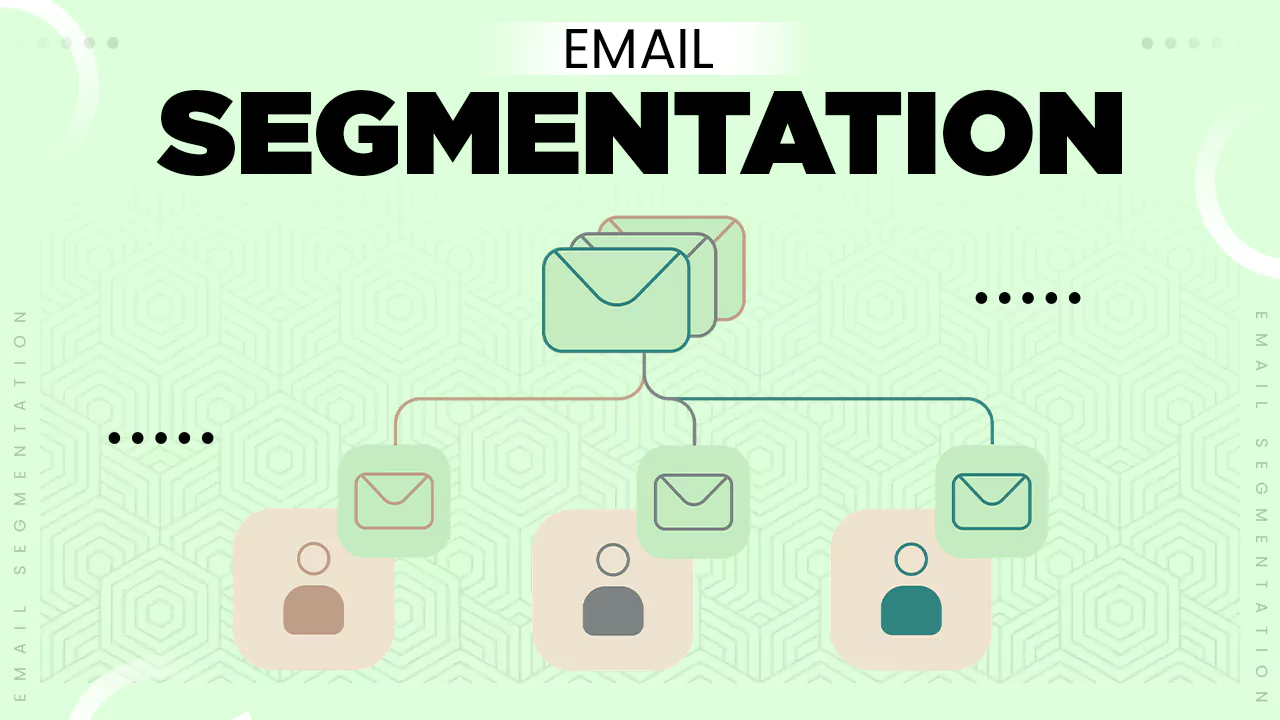
Handy tip: For better results, make sure that you include the practice of email segmentation. AI features in most tools for content generation will make it easier. You can design custom messages or content ideas for different groups in seconds for a better engagement rate.
8. MailerLite
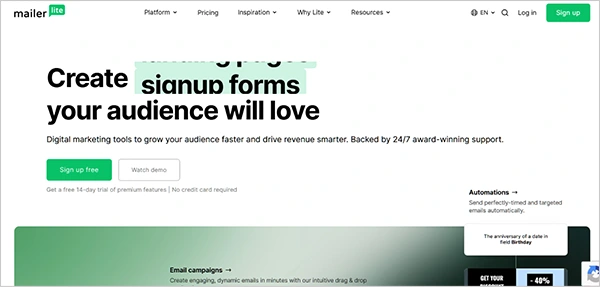
MailerLite comes with a free plan offering up to 250 subscribers, along with 2,500 emails a month. But if you want to upgrade, the paid version starts at $12 per month. The price isn’t that high. Thus, if the budget is an issue, it can become your go-to option. Beyond that, the platform might have a simple interface, but functionality is robust.
| Features |
|
| Pros |
|
| Cons |
|
| Best for | Freelancers and small teams |
| Pricing | Starting at $12 per month for 500 subscribers |
9. GetResponse
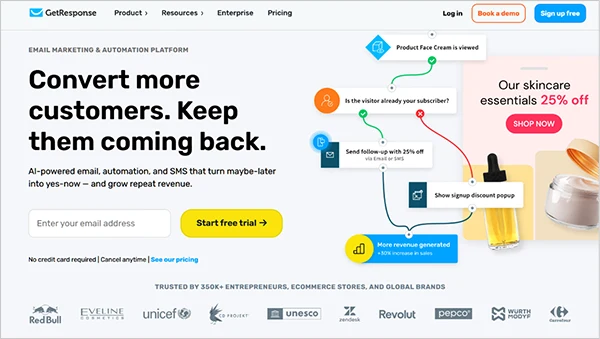
In 9th place, we have GetResponse, among the most popular email marketing tools we have chosen to discuss. It is a system with AI-enabled email, automation, and SMS for email marketing. It holds the potential to even convert your “maybe-later” clients, as the platform promises.
The platform offers scores of AI tools to streamline product recommendations, SMS, web-push notifications, forms, pop-ups, and other key aspects. Its free plan is available up to 2,500 emails. After the limit, you can upgrade by choosing any of the paid plans.
| Features |
|
| Pros |
|
| Cons |
|
| Best for | Businesses wanting to improve deliverability |
| Pricing | Starting at $19 per month for 1,000 contacts |
10. Twilio SendGrid
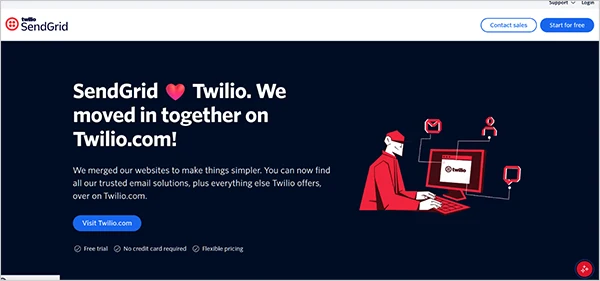
SendGrid is another cheap option for email marketing. That is because you pay here only for emails sent and not by the number of contacts. It works best when developers need high-volume API-powered sending. Although the paid plan starts at a very low price of $15 per month for as high as 5,000 emails, there is no free plan available. The only thing you can avail of is a 60-day free trial offer before you choose to upgrade.
| Features |
|
| Pros |
|
| Cons |
|
| Best for | Developers |
| Pricing | Starting at $15 per month for 5,000 emails |
Things You Should Look for in Email Marketing Tools
When you consider the best email marketing tools on the market, key things you should look for are as follows. These factors help you find which software serves you best.
- Pricing: It is the primary consideration you should pay attention to. If it is out of your budget or might be when add-ons are considered at scale, look somewhere else.
- Desired features: Make a list of all the features that you must have. Now, compare these must-have options with what a tool offers. It helps you learn whether a particular platform will be worth your time and money.
- Ease of use: The interface of the software must be intuitive and easy to use. So, you don’t have to spend additional time and money on training.
- Freemium: That is best if the platform offers a permanent free version. It will help you gauge the practical value of the system within your unique email marketing context. In case there is no freemium available, look for at least a decent 7-day free trial.
- 24/7 support: A service provider that is ready to listen to your grievances at any time of the day is an ideal option.
Also Read: 15 Important Local SEO Tools Every Business Should Use in 2027
Conclusion
The top 10 best email marketing tools available in the market have been amply elaborated above. Your approach, as a marketing manager, shouldn’t be to instantly pick any one tool out of the list provided. Instead, the effective strategy requires you to go through all its key features, pricing plans, hidden costs, setting up a primary talk with the support, and do as much as thorough investigation as possible before subscribing to a long-term paid plan.

Leave a Comment
Your email address will not be published. Required fields are marked *