

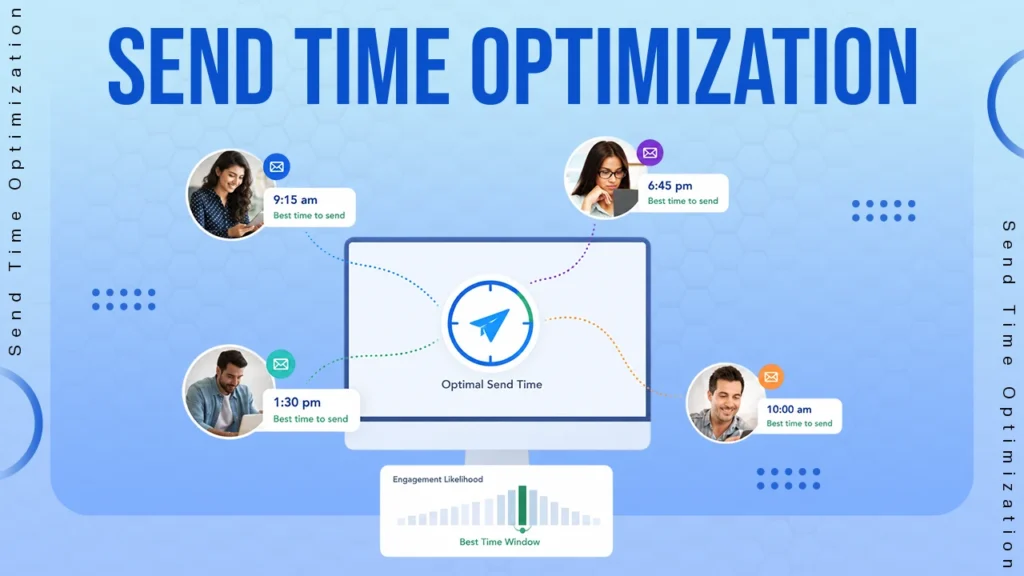
There is a Goldilocks time to send email when people respond to them the most.
It’s the Send Time, which is derived from the past engagement of the user with the brand. When this data is taken as an underlying reference to gain user engagement is what we call Send Time Optimization.
It is not a single universally accepted time, but varies and depends on multiple factors.
Also, the smart intervention of AI is making it more convenient and a proven boon in email marketing.
What Is Send Time Optimisation And What Does It Matter?
Send Time Optimization is sending mail to people when there is a high probability of their response and making conversions.
It simply overcomes the guesswork about when to send the mail to get a response from the customer by increasing the chances of engagement.
Here is how it works.

Send time does not mean any particular time concluded and backed by any study about when the readers open the mails the most. It is about when there is a high chance of receiving responses from the users.
It makes your mail appear at the top and gain the advantage of being readily attended.
Also, this time varies from person to person, and hence categorisation of the recipients is required. So sending the mails in batches works the best.
Here Louis Shulman, Founder of Moat Newsletters, is of the view that:
“Your newsletter timing should match when they’re actually receptive.
Not when some study said emails get opened most.”
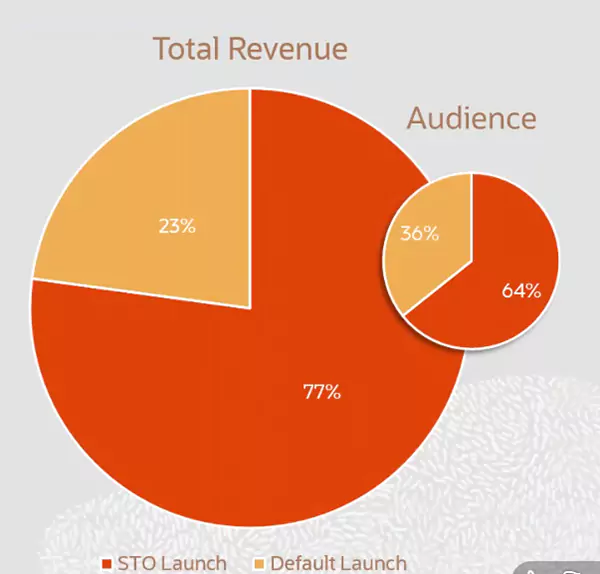
Considering its advantages, the figures by Oracle Marketing Cloud state that time optimization helps in earning 77% of revenue from 64% of the audience after exercising this strategy.
There have been many studies and surveys concluding the best time to send emails, like what Neil Patel, the renowned digital marketer, has said.
But sending time optimization is all about making the email marketing more personalized, rather than scaling the entire customer list on the same yardstick.
What Factors Govern Send Time Optimization?
Send time optimization is an intricate approach. Thus, many facets influence the process of deriving it.
Here are certain factors that govern the STO. These are:
- Time Zone: The customers of a firm might be located in the far east, far west, or in any corner of the earth. So translating the time of their reaction with respect to the time zone where the firm is located is very important. For example, a Canada-based firm sends mail to a Korean customer at 10 am. Then the client will receive the mail at 11 pm or 12 am. Do this math before coming up with STO.
- Habits and Predispositions: The behavioral patterns vary among people. Some check their mail right after waking up, while others see it at lunchtime or even while going to bed. Consider it to raise the chances of conversions.
- Occupational Patterns: People working night shifts will respond at different times as compared to those working the day shift.
- Demographics: Young people will stay awake late at night, while senior citizens prefer getting to bed at 9- 10 pm. Hence, their free time to check mail varies accordingly.
What Are The Benefits Of Send Time Optimization?
Send time optimisation is the vogue strategy that firms are following by heart. This is because of its notable advantages.
The major merits of send time optimization are:
- Increased engagement with the customers
- Enhances conversions
- Better ROI
- Strong customer base (as you struck their chords at the right time)
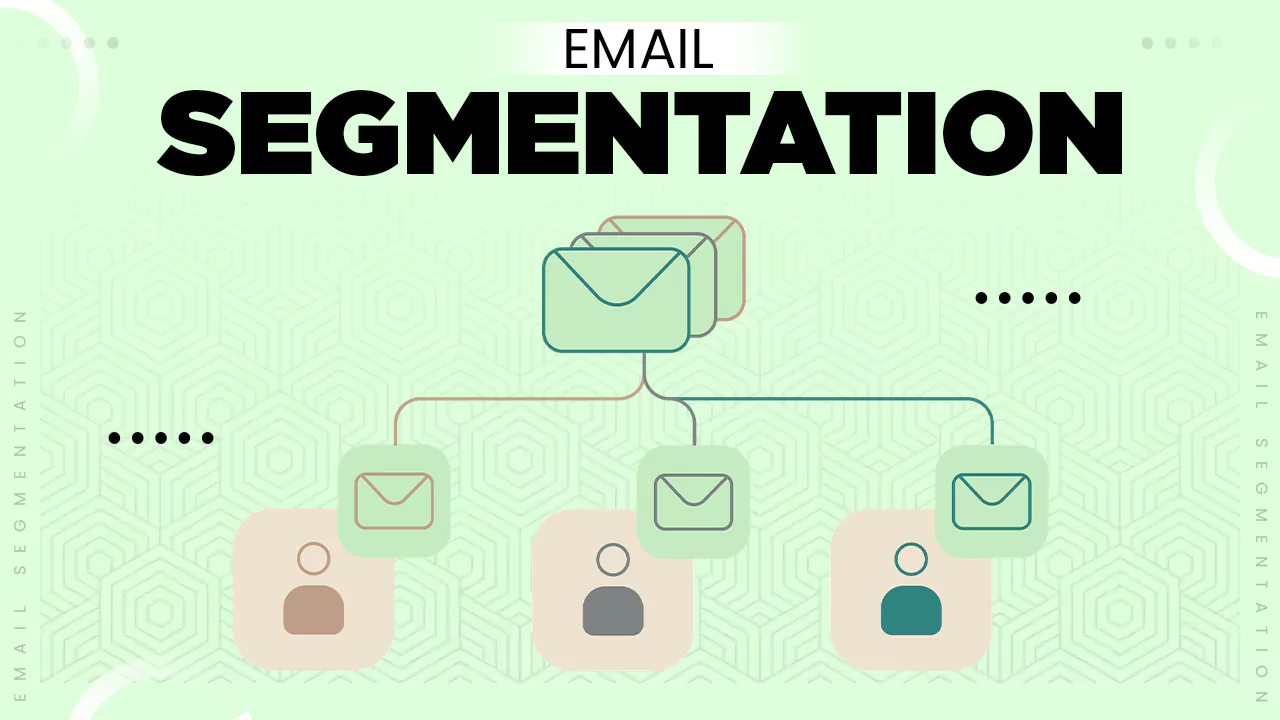
Suggested Read: Email Segmentation in 2026
Role of AI in Send Time Optimisation
Like other niches, AI has also altered email marketing. Although the transformation is gradual, it is significant enough to make observable changes.
Some tasks where AI can assist in send time optimisation are:
- Data Collection at Individual Levels: AI collects detailed data, which works as the foundation of the STO strategy.
- Recognise Patterns: The collected data helps in analysing and understanding the pattern of user engagement, like when they open it and how much time they took to respond to it.
- Predictive Modeling: The recognised patterns help in predicting the models that derive the most appropriate time to send mail and receive response from the customer.
- Flexible Scheduling: The send time varies from person to person. AI agents like Claude Code can be used in segregating the pool of contacts into groups and sending the mails in batches.
All in all, the most significant role of AI in STO is analysis and automation, which can be attained through software like Salesforce’s Einstein AI and SAP’s Netcore AI.
Digital Marketer’s Views
Neil Patel, Co-founder of NP Digital & Owner of Ubersuggest, and a renowned digital marketer and founder, has suggested understanding the behavioral cues as a precondition for scheduling the mail.
In this perspective, Hostinger has taken a blunt stance and suggested a 10 am to 2 pm time window on Tuesday, Wednesday, and Thursday. The rationale given was that at this time people generally remain active while being less distracted and less exhausted.
Final Words
Email marketing is getting more personalized, and new techniques like email segmentation are being favoured to stay more connected to the customers. Here, send time optimisation is a hyper-personalisation strategy that can yield productive results.
But good-quality user engagement data is a prerequisite, ignoring which might derail the entire strategy.
Next Read: Measuring AI Visibility: The New Metrics That Matter

Leave a Comment
Your email address will not be published. Required fields are marked *