

While commencing the SEO journey, the most elementary doubt is where to start and how much to cover at level 1.
Here comes SEO 101, i.e., the initial phase of search engine optimization where only the basics matter.
This doesn’t include mugging up complex fundas. Rather, just keep a holistic understanding of different perspectives.
If you are new to SEO, then this guide will help you understand the fundamentals of all 3 of its core dimensions, i.e., technical, on-page, and off-page SEO.
Understand the Fundamentals of Technical SEO
Foundational Technical SEO is the subdomain of SEO 101 concerned with the technical infrastructure and health of the site.
The most common rule here is:
“The crawlers should not locate any issue in inspecting the site”
The cardinal points of technical SEO 101 are as follows.
Site Audit
The site audit refers to how efficient the website’s infrastructure is, i.e., how good the technical structure of the site is.
There are several tools available for it, but some noteworthy trusted options are Screaming Frog, Semrush, Ahrefs, and Ubersuggest.
Page Speed
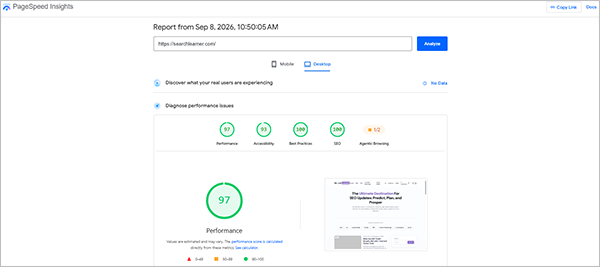
A novice must learn to check how fast the website loads on desktop browsers and mobile devices.
Here, simply visit Google’s Page Speed Insights, enter your website URL, and see its performance metrics.
Broken Links
Broken links are links on the site with a valid URL, but no page is found at that particular URL.
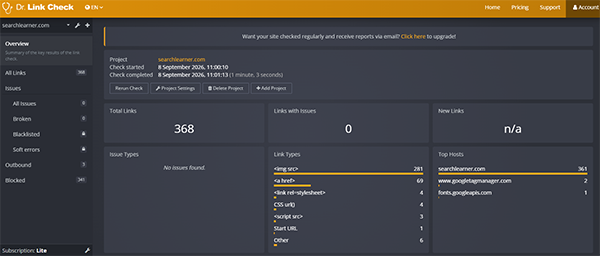
To check this, you can use any of the 2 options provided below.
- Visit Dr. Link Check, enter your site, and run a check to find the broken links.
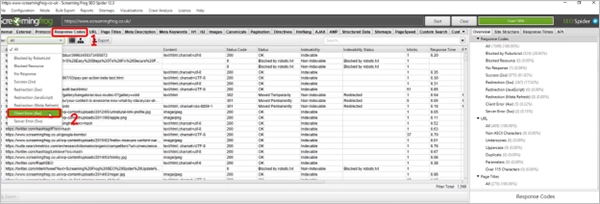
- Install Screaming Frog SEO Spider and run a website audit. Then click on “Response Code”; in the filter dropdown, select “Client Error (4xx)” and you will get the list of broken links.
Submitting Sitemap
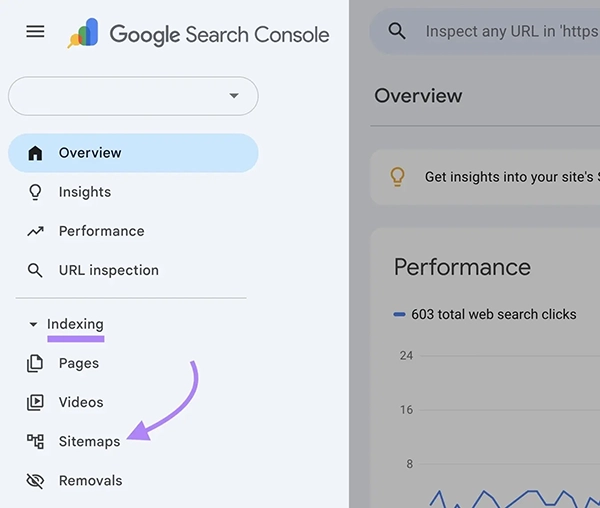
A sitemap is a blueprint of the site that helps Google find its webpages. To submit the sitemap, go to:
Google Search Console ⇒ Indexing ⇒ Sitemaps
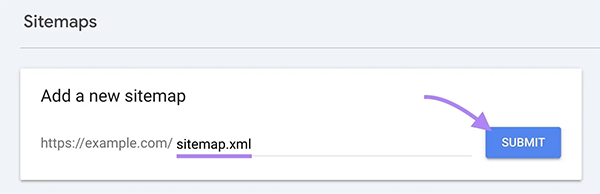
Then paste the sitemap URL in the text box that appears.
Robot.txt
Robots.txt is a file that conveys to Google crawlers which pages to crawl and which not.
Search for the “Allow” or “Disallow” commands in the file and analyze if the links provided adjacent to them are correctly placed.
However, Google has clearly mentioned that different crawlers interpret the syntax differently. So using syntax for different crawlers is suggested.
Also, if any page is disallowed in robots.txt from indexing but has backlinks from other sites, then it will still get indexed.
Checking Indexing Status
Indexing is when the crawler visits the site pages, finds a new page on it, adds that page to its directories, and makes it visible in the search results.
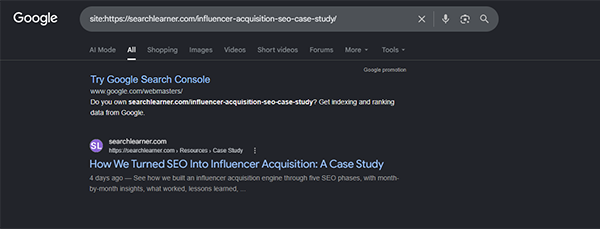
To see whether the page is indexed or not, just enter the following syntax in the Google search bar without any spaces.
site:WEBPAGE URL
And press Enter.
If you see your page’s meta tags and link on the search page, then it is indexed; otherwise, it is not.
You can also request urgent indexing through Google Search Console.
For this, go to:
GSC ⇒ URL Inspection ⇒ Enter the respective URL in the search bar ⇒ Request Indexing
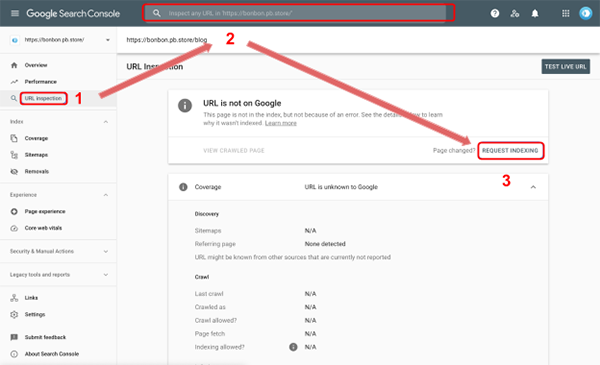
Although there is no set timeline for how long it will take to get your page indexed, it will definitely work faster than the general crawling schedules of the search engines.
Suggested read: Tiktok Seo In 2026: How To Rank in TikTok Search
The On-Page Fundamentals
On-page SEO 101 deals with making the content live up to the expectations of the search engines to help them understand the content and rank it accordingly.
The on-page SEO 101 learners need to understand its fundamentals, which are easy to grasp and provide great returns in less time.
Thorough Keyword Research
Keywords are the substratum on which the content is built. If this stage goes wrong, everything goes wrong.
So, extensive keyword research is required to derive niche-specific ranking opportunities.
Here, Google Keyword Planner, Google Trends, SEMrush’s free keyword magic tools, Mangools, and Ahrefs’ free keyword generator are the best options.
Make sure you target low-difficulty keywords for new sites and gradually move to medium- and high-difficulty options once the site starts getting traffic.
Content Basics
There is a specific structure that attracts Google and is conducive to ranking in search engines and being cited by LLMs.
This is achieved by the content structure required for on-page SEO 101.
Here are some recommendations for it.
- Clear headings, i.e., H1, H2s, and H3s.
- Short paragraphs with crisp answers to the queries.
- Use bullet points, comparison tables, and lists to simplify the reading experience.
- Add an intriguing meta title and meta description, each having the respective keyword.
- Keep the URL length 70 ± 5 characters, while also including the keyword in it.
Mr. Vinay Kumar has also provided some valuable insight about structuring content to get it cited in AI answers.
Optimize Multimedia
Heavy images slow down the page loading speed, which might appear as a technical SEO issue.
The 2 recommended solutions for it are:
- Keep the image size below 100 KB (as recommended by Screaming Frog)
- Use WEBP images instead of JPG or PNG.
If you want to show a video on your blog post, upload it to YouTube, get its embed link, and put it in your content. Avoid uploading the video directly on the blog post.
Ensure Internal Linking
Interlinking means adding the URL of other pages of your site to your new content. This allows the reader to navigate between pages of your website.
Here, the best practice is to add at least 2-4 internal links in content based on its length.
Also try embedding the link in the text related to the heading of the page you want to link to, rather than just adding the URL to “click here”.
The Mechanics Of Off-Page
Off-page SEO 101 covers building site reputation without interfering with the content of the site. It requires building a good reputation among the websites or communities related to your niche.
That’s why it is called OFF-page, as it is done outside of one’s own webpages.
The core learnings of off-page SEO 101 are:
Link Building Profile
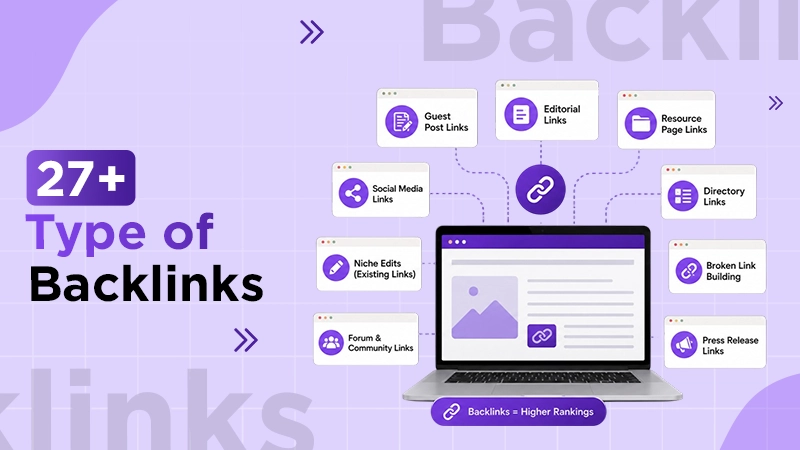
Backlinks are trust signals reflecting that reputable sites see your website as a dependable source.
Auditing and enhancing your link-building profile will help you see the quality of backlinks directing to your site.
Some suggested practices for efficient link building are:
- Go with backlink strategies after the site starts getting sufficient traffic. Until then, focus on publishing valuable content.
- Avoid making backlinks on sites with a DR score less than 30.
- The backlinks must be made on sites related to your website’s niche.
- Keep a ratio of 7:3 for dofollow and nofollow backlinks to avoid triggering spam penalties from Google.
- Don’t make backlinks on websites solely publishing guest posts
Link Building Strategies 101
Out of myriad ways of link building, newcomers can go with the following white-hat link building tactics.
- Broken Link Building: Find broken links on sites with a good DA score in your niche, create a content page fulfilling the requirements of that broken link, approach the site, and request that they redirect that broken link to your page.
- Link Insertions: You can provide infographics, long-form content, or tools like a BMR calculator or a Multiple URL Opener to any existing post on any website to seek backlinks.
- Guest Posts: Make value-stuffed guest posts that get posted on other authority-possessing sites.
Review Strategy
For local SEO 101, review strategy matters a lot. The reviews and ratings on the Google Business Profile send a positive indication to the search engine about the valuable service that the business provides, which automatically boosts rankings and appearance in AI citations and snippets.
However, make sure you don’t follow unethical practices mentioned in the Google Review Policy 2026 to avoid attracting penalties or derankings.
Suggestions From the SEO Experts
Brodie Clark has provided some of the best practices for SEO 101 for using schemas for e-commerce sites.
Jake Ward has suggested something very beneficial in his LinkedIn post about on-page SEO 101 regarding updating content.
He said:
“Update old articles by adding new sections rather than subtracting content (unless correcting inaccuracies).”
Also, Ben Goodey has emphasized sticking to some foundational SEO best practices to get great results.
Sum Up
SEO 101 is concerned with the fundamentals of search engine optimization. But it is further evolving under the impact of AI strategies such as query fanout and RAG, which is making way for GEO and AEO.
However, the basic approaches to SEO will remain the same.
Next Read: Ecommerce SEO Checklist 2026: Essential Checks for Better Rankings
Leave a Comment
Your email address will not be published. Required fields are marked *