

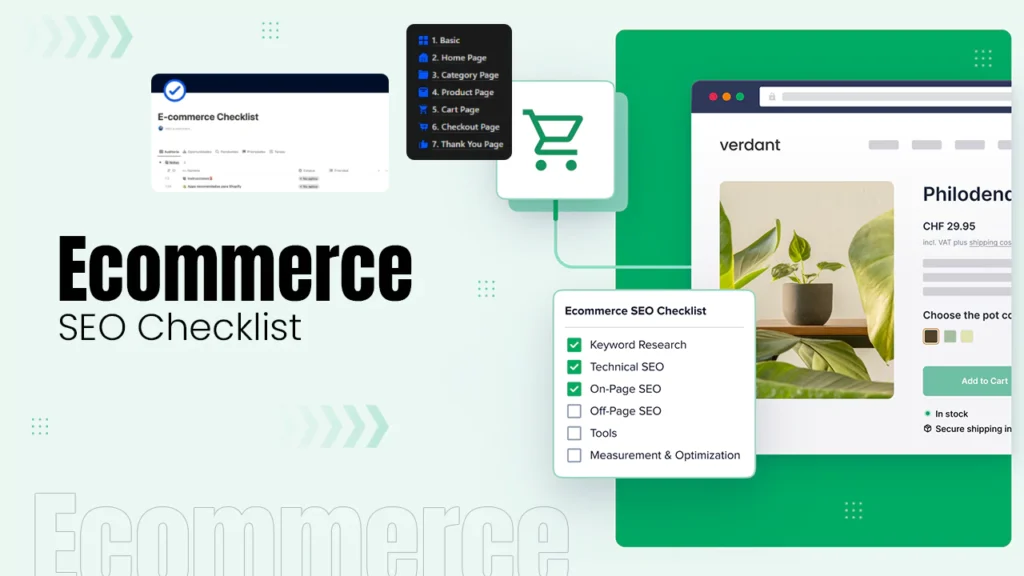
SEO has diversified into multiple subcomponents, and ecommerce SEO is the one gradually making room in the contemporary digital marketing niche.
The interesting part is that some traditional SEO techniques work in ecommerce, but a few unique strategies are required here to promote a particular product and make good sales.
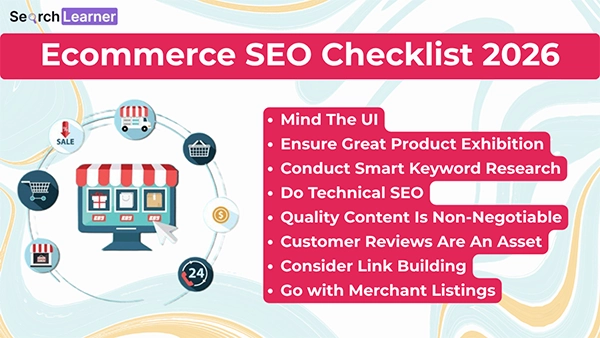
The most crucial ecommerce SEO checklist for 2026 is here that will optimize your site to make it appear at the top.
Ecommerce SEO Checklist 2026
An ecommerce site requires significant attention from all dimensions that even sometimes get ignored in normal sites, such as visuals, which matter a lot in product pages but are not considered much in normal blogs.
Here is an ecommerce SEO checklist 2026 that SEO experts must adhere to before releasing their website or product for sale.
1. Mind The UI
The UI, i.e User Interface, is what your audience sees first when they visit the website. Make sure the UI has:
- Clear navigational features with incorporated breadcrumbs
- Intriguing CTAs
- Contains search filters
- Has a mobile-friendly design
- Properly structured (not cluttered elements)
2. Ensure Great Product Exhibition
Imagine yourself in the place of your customer and understand what people would be expecting: how the item looks. For this, you can go with:
- 360° product view
- Multiple product images
- Clean and sharp images
- Mention the dimensions (if necessary)
3. Conduct Smart Keyword Research
Keywords have been the foundation of SEO since its inception.
Conduct thorough keyword research, look for what people are searching for, and add them smartly in product names, descriptions, categories, and blog posts.
Choose the low-hanging fruit, i.e., keywords with less competition, to get highlighted.
Use tools such as Ahrefs, SEMrush, Uber Suggest, or extensions like Keyword Everywhere for enhanced and deeper analysis.
4. Do Technical SEO
Google has already provided its requirements for technical SEO for ranking a site. For ecommerce sites, the fundamentals remain the same, but there will be more emphasis on certain aspects.
- Maintaining Site Structure and Navigation: Crawlable URL structure, optimize images, and address faceted navigation issues.
- SSL and Site Security: Use HTTPS to secure your site and improve credibility.
- Ensure Schema Breakups: Pick the relevant schema types like Product Schema, FAQ Schema, Product Review Schema, or Merchant Center Listing Schema to make the product more understandable to the search engines.
5. Perform On-page SEO
On-page SEO is necessary to make a particular page eligible to the search engines, understand the internet, and rank it. Some best practices for on-page SEO for ecommerce sites are:
- Optimize Category Pages: Intriguing and genuine headings, add a 200 ± 50-word description, optimize meta title, use canonical tags for sorted page variants, implement list schema, and use internal linking.
- Work on Product Pages: Use a comprehensive H1, add high-quality images, consider product schema, ensure the canonical tag targets the preferred URL, and add product decisions with primary and secondary keywords.
- Boost Trust Signals: Comprehensive return and refund policies and secure checkout are always rewarded by the search engines.
6. Quality Content Is Non-Negotiable
Every blog post should convey something productive to the user and help them make decisions. Use the following blog types to help your audience.
- How-to and buying guides
- Comparison posts
- Useful tutorials
- Focus on evergreen topics
- Publish posts based on seasonal trends before the season comes, as suggested by Matt Diggity.
Always emphasize the rule of “Less Words, More Meaning”
You can also consider using Natural Language Processing Optimization Tools to ensure your content covers everything Google requires
7. Customer Reviews Are An Asset
Reviews and ratings on Google Business Profile act as credibility markers for the search engines as well as the customers.
However, using unethical tactics and shortcuts to get them is not a wise move at all. Google algorithms are smart enough to track the unscrupulous maneuvers attempted for disproportionate gains.
Make sure your strategy adheres to the Google Review Policy 2026 to trigger a genuine response from Google.
8. Consider Link Building
Link building is still a workable strategy to build a personal brand, which can be through created, earned, or outreached links.
For e-commerce sites, you can consider:
- Opt for Guest Posting
- Go with Digital PR Agencies
- Participate in communities and forums
- Identify authoritative sites in your niche and analyze their backlink profile.
Suggested Read: How AI Agents for SEO Can Turn Data Into Action
Suggestions From SEO Experts
Brodie Clark has suggested including Merchant Listings in the e-commerce SEO checklist.
Read his views here:
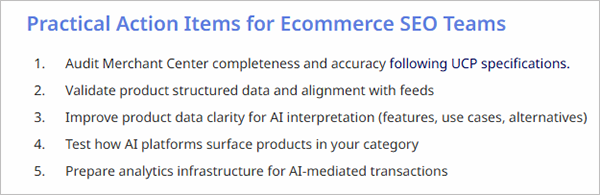
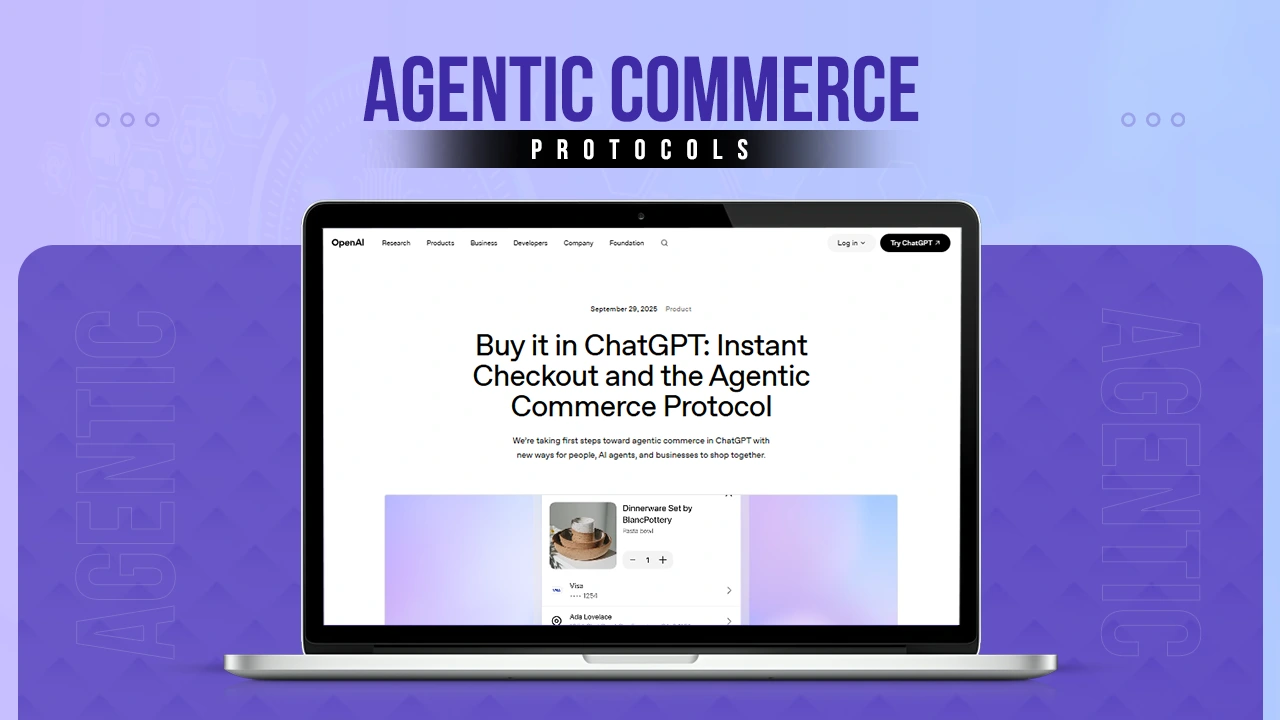
Also, Aleyda Solis has recommended preparing the site for UCP, one of the Agentic Commerce Protocols. For this, she provided a few suggestions for the e-commerce SEO teams in her blog.
Connor Gillivan has provided a checklist for keyword research for e-commerce sites.
Final Words
Ecommerce SEO Checklist 2026 skeletonizes the essentials that SEOs should stick to. Try making the most out of it. If you have your basics clear, then it won’t take you long to digest these must-dos.
Always keep your customer in mind and make your move accordingly.
Next Read: What’s New in Google Merchant Center AI Tools Update?

Leave a Comment
Your email address will not be published. Required fields are marked *