

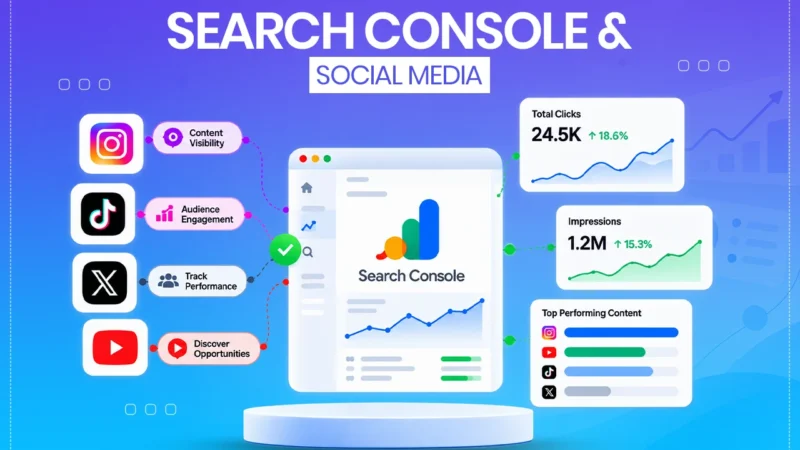
The global rollout of platform properties in Google Search Console has opened the floodgates for utilizing social media content to rank on SERPs.
Earlier, social media was something meant for entertainment, but this very feature is proof that Google is hunting relevant solutions for user queries from multiple sources.
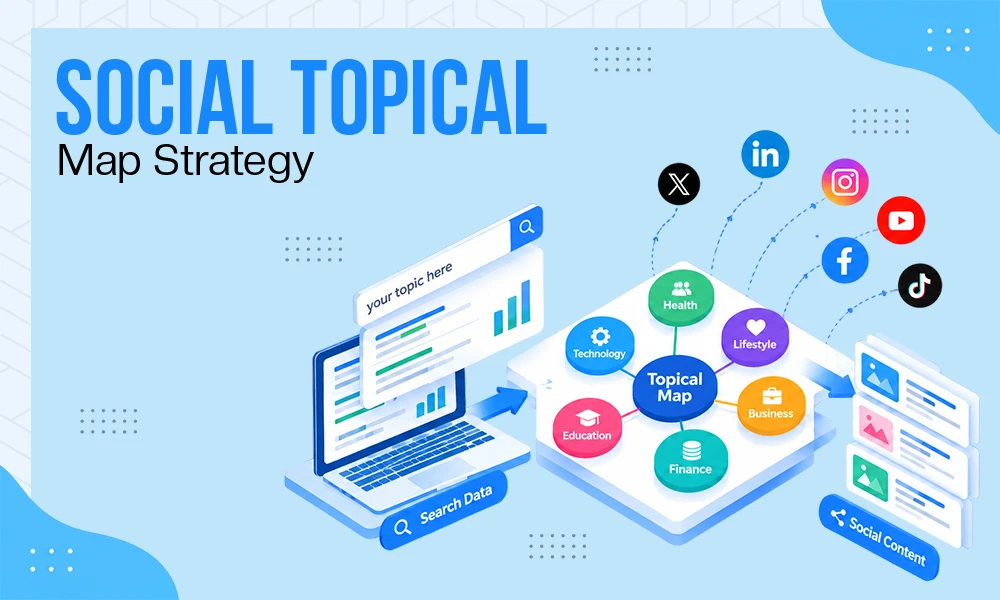
However, building a social topical map is necessary to use social media content conducive to Google SERPs.
Here is a clear roadmap for it.
How to Build a Social Topical Map?
A social topical map somewhat resembles the SEO topical map but differs in what kind of content you can get people to consume.
Below is the step-by-step process for it.
- Identify the Core Topic: Your core topic will be related to your niche; i.e., it will be a broader topic that will relate to every topic you put on your social media handles. Let’s take SearchLearner. Its core topic is digital marketing. Hence, every topic on this site or social media account will somehow relate to digital marketing.
- Track Search Demands: The core topic covers many small queries and subtopics that people are concerned about and constantly search for to get answers. Use them as the foundation of your content and try resolving the key issue behind them. Find more opportunities on discussion forums such as Reddit and Quora; check People Also Ask and autosuggestions on Google Search, and try Google Trends and Keyword Planner. Do some query fanout exercises to find what perspectives can be covered.
- Trace A Social Topical Map: Make clusters of the selected subtopics or queries and jot them down in a spreadsheet with broader topics and related subtopics. Find the primary concern of people searching for such terms and understand their intent.
- Finalize the Format: Make sure your content format matches the intent. For example, educational or comparison content requires a lengthy and detailed video. While introductory, quick-to-do, or simple hacks can be provided through shorts or reels.
- Use Metrics to Measure Performance: There is an analytics dashboard for all social media platforms, like YouTube Studio and the Professional Dashboard on Instagram. The Platform Properties feature in Google Search Console is yet another new tool to see how your content is performing on YouTube, Instagram, X, or TikTok.
- Embed It With A Post: There is a background story and supporting information about the topic you have covered in the social media content. Try making a blog for it and embed your video in it to help people understand it better.
- Consider AI Repurposing: You can also opt for AI content repurposing, i.e., creating different content types from just one content piece. You can make shorts out of your video, put a content summary on X, and refer to the source link. This will give you more traffic from just one piece of content.
What Digital Marketers Have Opined?
Lawrence Hitches indicated the need for a social topical map by depicting the gradual confluence of SEO and social media. In his LinkedIn post, he said:
“SEO and social media are fusing now, and the idea I’ve been thinking about for years, we can actually visualise it and see the data
The topical map we use in SEO to rank website pages… what if you ran it for social media accounts instead?”
Discussing the trends of how the social media domain is evolving, Neil Patel has expressed some valuable views on social media strategy in his blog. He said:
“This means your strategy has to account for a world where social content fuels discovery, credibility, and even search visibility. The brands gaining ground are the ones creating content that answers real questions, serves real intent, and earns genuine engagement from the communities they want to reach.”
All these are hinting toward the necessity of a thorough social media topical map.
Concluding Remarks
With Google’s gradual shift to increase the inclusion of social media platform content, a social topical map is a prominent way forward to attract traffic from Google search results and Discover. The scope is broadening, and so are the opportunities.
The only mantra for it is making content that solves the user’s problems.
Next Read: How to Grow Followers on Instagram Organically: Turn Reach Into Follows

Leave a Comment
Your email address will not be published. Required fields are marked *