

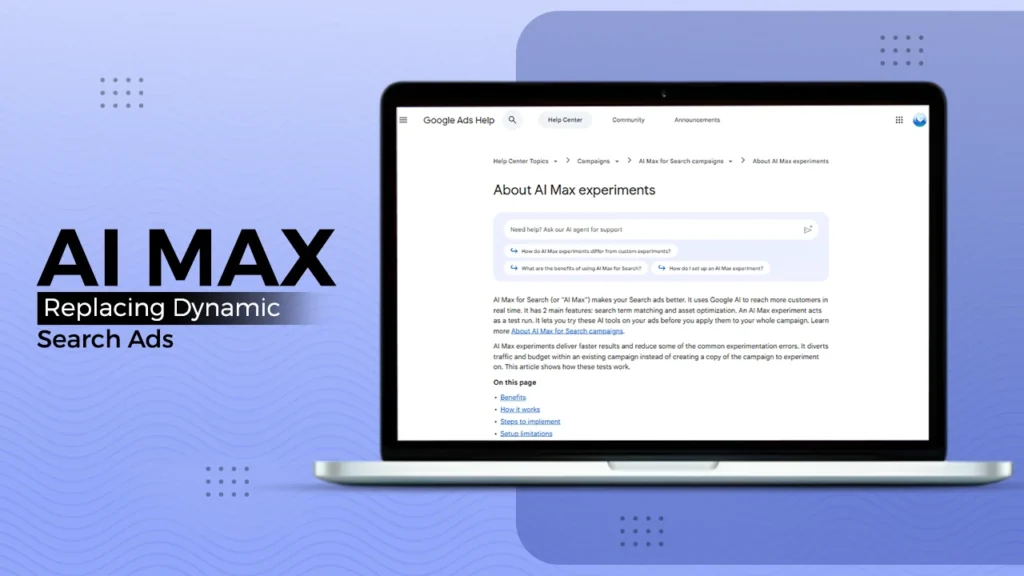
A bunch of AI-based features are integrated into Google Ads, which are expected to transform the ad campaign experience.
Google has revealed in its official blog by Brandon Ervin, Director of Product Management, Google Ads, that new features backed by AI Max will gradually take over the DSA (Dynamic Search Ads) features.
It will not completely bring changes afresh. Rather, users will find a gradual shift to the new features, with the fading away of older ones.
More Impact with Phased Transition
The new features will bring more value and avenues of better service to the users in multiple ways, like targeting, controls, and reporting.
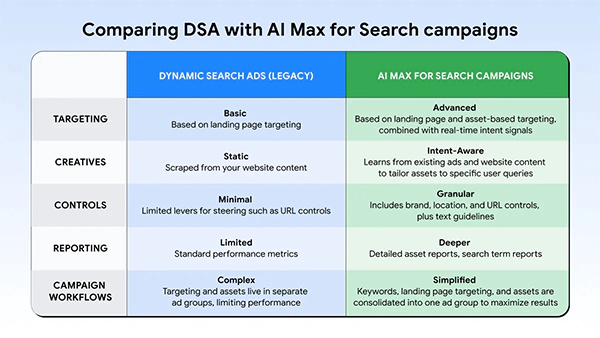
Google has informed that the transition to the new features will be driven progressively and will impact user groups differently.
The upgrades will be in the following 2 phases:
Optional Upgrades
Dynamic Search Ads users will get the option to migrate the data and settings to new ad groups.
While the ACA and campaign-level broad match setting users will see a pop-up banner in the Google Ads interface, from which you can switch to AI Max.
Google has suggested using AI Max as soon as possible to familiarize yourself with its features and make the most out of it.
Automatic Updates
From September onwards, Google will automatically upgrade all campaigns with legacy settings to AI Max, thus ending the DAS for Google Ads. This will be intimated to the users through an official email.
Here is how it’s going to impact you based on the availability of features.
 | Search Term Matching | Text Customization | Final URL Expansion |
| DSA Users | ✅ | ✅ | ✅ |
| ACA Users | ✅ | ✅ | ❌ |
| Campaign-Level Broad Match Users | ✅ | ❌ | ❌ |
Google expects to complete this shift by the end of September.
Suggested Read: Google’s June 2026 Spam Update: Does it Mean AI Manipulation Is Now Officially Spam?
How to Prepare for AI Max?
The shift is ongoing, and you need to prepare for it before it becomes the only option. For this, you need to make some smart moves to imbibe the changes from within.
- Use AI Max Experiments: Google has suggested opting for AI Max experiments to understand the before-and-after performance.
- Mind the Microconversions: Don’t just run for final conversions. Even the small conversions matter and are required to be considered, like someone downloaded your brochure, saw your product video, etc.
- Feed the Right Information: AI Max works on what information you provide. Any issues in the information will stimulate wrong signals and can trigger unfavorable decisions.
- Substantive Landing Pages: AI Max goes through your landing pages to make ad copies. The clearer and more informative your landing page is, the better your ad copy will appear.
Reviews By Digital Marketers
Digital marketers have been expressing diverse opinions about it.
Adam, Google Ads Growth Expert, has explicitly said that AI Max is gradually becoming the favorite of e-commerce businesses.
In another statement made by Sola Mathew, DTC Revenue Strategist, he showed how his ad strategy, supplemented with AI Max, has made him achieve 4.5 ROAS in just 7 days.
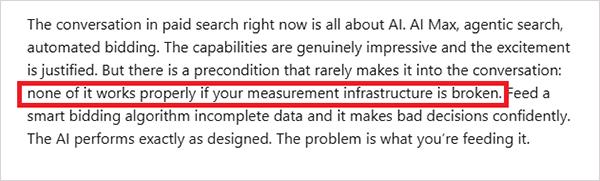
However, some cautionary opinions have also surfaced concerning AI Max, like the one made by Thomas Hirst, Director, Paid Search at Brainlabs and Freelance Google Ads Specialist.
Google has been transforming the ads in a whole new way, like tightening the disclosure rules for ads in July this year.
All these developments hint at making Google content smarter, more informed, and user-specific.
Final Remarks
The most useful and productive advice here is to stay active and match the pace at which Google is evolving.
Considering the current trajectory, there is a high chance that AI Max might come up with a more integrated approach, as ads in AI mode are already driving a new change.
Next Read: Proximity, Reviews, and Relevance Drive Google Business Profile Rankings, Study Finds
Leave a Comment
Your email address will not be published. Required fields are marked *